New Homes Guide Blog

Welcome to the New Homes Guide blog, a forum designed with new homebuyers in mind. Join our resident bloggers as they spotlight buying trends, home design, tips for new homeshoppers, new community openings, builder events and more.

Posted: May 9, 2012 at 10:47 am by: Nicole

New Homes Guide has done it again with a fantastic new free supplement: Best Floorplans 2012. This latest piece is a collection of innovative floorplans from the DC region’s finest builders and is available with the May/June issue.

We are always hearing that when someone is shopping for a new home, something they love to do is look at floorplans. Shoppers like to see what’s available, which structural options are offered and how their furniture might work in the new home. Realtors tell us they enjoy being able to see the floorplans in advance to know whether or not the builder has something that might work for their client or even simply to see what that builder’s style is. In response to those requests, New Homes Guide has published a supplement to our magazine that contains 53 floorplans from 17 builders.

Would you like your own free copy? Email us at nicole@newhomesguide.com or call 703-992-1100 to get your copy of Best Floorplans 2012 today!

Happy House Hunting!

Posted: April 20, 2012 at 3:48 pm by: Nicole

As the real estate market perks up this Spring, a lot of buyers are looking for new homes. The big question for many of them is whether or not to strike out on this adventure on their own or to work with a Realtor. Oftentimes, their decision ends up being based upon some factors that are actually myths.

The first myth is that new home builders and real estate agents do not work well together. This couldn’t be further from the truth. Home builders know and respect that many potential buyers walk into their models because their agent told them to. Agents enjoy the new home purchase for their clients because of the assurances a builder can give their client that there is often no control over in a resale.

Another common thought the buyer often has is if they sign a purchase agreement with a builder and do not use an agent, they will be able to negotiate a better deal because the builder isn’t paying a commission. Also another big leap that is incorrect. For one thing, builders have tracked sales that involved agents for years and incorporate these fees into their marketing budget. Also, builders are well aware that they should not cut off their nose to spite their face, so to speak. With the volume of buyers accompanied by a Realtor, a builder does not want to alienate them or become “black-balled” by agents because they offer special discounts if there is no agent.

Lastly, some Realtors believe that they will be cut out of the deal if they are not with the clients on the first visit. Again, generally not the case. Sales Representatives in the models are trained to ask how you found their community and if you are working with an agent. They want to know the procurring cause of their sale as much as you want them to know you sent your client there. While it is certainly preferred that you accompany your client on the first visit, this isn’t always realistic. A couple methods to protect yourself from your excited client that is stopping at every model they see is to arm them with your business cards and make certain they are aware of the importance of them telling the Sales Representative that they are working with you. If you know where your client is planning on going, give the model a call beforehand to introduce yourself and let the Sales Representative know you are working with someone who will be stopping by without you.

Buyers should always be aware that the number one source of information on a particular new home will be the builder. Also, working with a Realtor will give them a wealth of information and knowledge about the community, values and the surrounding area. So, for buyers, I have always told them to use all of their resources when making such a monumental decision and that can mean working with both the builder and a Realtor if it’s the right fit for them.

Happy House Hunting!

Posted: April 9, 2012 at 12:34 pm by: Nicole

One of the first items on your new home quest checklist should deal with your finances because getting a mortgage these days can prove to be challenging. We hear about the issue almost daily but what do YOU do to put yourself in the best position to obtain the best mortage? There are some basic steps you should take both to keep your credit looking good and to make sure your financial picture doesn’t change during the mortgage application process.

  1. The very first step is to find out what your credit score is right now. You may have checked in the past year, but you may not be aware of changes that have posted to your credit report – either correctly or erroneously – that have affected your score. All three major credit bureaus (Equifax, Experian and TransUnion) must provide you with a free report annually so be sure to get a copy from each one. One of the easiest sites I’ve found to work with is AnnualCreditReport.com.
  2. Do you pay your bills on time? Even 1 or 2 late payments can greatly affect your score so be sure to stay on track with your payments and due dates.  Setting up automatic payments is a great method to make sure you don’t ever miss a payment.
  3. Your income should be steady and reliable. Sounds basic enough but realize that lenders really like to see at least 2 years of employment within the same field and you will need to provide the supporting documentation. If you hold a commission-paying job, you may need even longer time in that field.
  4. Please don’t go out and buy that new boat (or car or motorcycle or any big ticket item!) as soon as you get loan approval! New loans can adversely affect your credit during the critical period from loan approval thru settlement so hold off until you’ve gone to settlement. And keep in mind, it’s not just new loans – you need to maintain a certain amount of reserves so paying cash for expensive items doesn’t necessarily help. If you must absolutely purchase something, talk to your lender.
  5. A common theme I have often heard is that buyers want to close old credit cards. That’s not necessarily the best move so talk to your mortgage lender before doing so. The lenders want to see credit history and a reasonable amount of available credit - closing cards can affect both of those.

These are just a few tips to help you purchase your dream home this year. Bankrate.com offers additional advice as well so check out their recent article “12 Mortgage Moves to Buy a Home in 2012″. And of course your lender is one of the best resources to talk to them to get guidance tailored for you.

Happy House Hunting!

Posted: March 30, 2012 at 2:15 pm by: Nicole

 We have our guest blog writer, Leslie Wish – Senior Loan Officer at McLean Mortgage, giving us some great information about VA Loans:
 

You would be amazed at the number of people who are eligible to use the VA loan program and don’t know it!  In my opinion the VA loan is the best loan going right now.

The VA loan program can make it much easier for veterans to secure a home loan by requiring little or no down payment. This home loan is available to veterans and is guaranteed by the Veterans Benefits Administration, a part of the US Department of Veterans Affairs. In addition, with a VA-guaranteed loan, there is no private mortgage insurance requirement.

You are eligible for a VA loan if you have previously served in the military or are currently on active duty or in the reserves. You can check to see if you meet the requirements at http://www.benefits.va.gov/homeloans/eligibility.asp .   VA loans offer 0% down payment options for loan amounts up to $625,500 in the Washington DC Metro area.  For loan amounts greater than that there will be a down payment required.

The VA loan offers flexible qualifying terms.  There is a VA Funding Fee that is applied to the loan and the amount of the funding fee is determined by the amount of down payment.  The funding fee can be financed into the loan amount or it can be paid in cash as part of the closing costs at the time of settlement.  In certain cases the VA funding fee can be waived if the veteran receives a VA disability award.

Leslie Wish


If you are unsure as to whether or not you are eligible for the VA loan please email me at lwish@mcleanmortgage.com or visit me online at http://www.lesliewishmortgage.com/ and I would be happy to assist you in determining whether you qualify for the VA loan.


Happy House Hunting!

Posted: March 21, 2012 at 3:05 pm by: Nicole


It seems that there is one question that those either working in real estate or contemplating getting real estate have always asked: Is it better to buy or rent a home? This question comes up time and again regardless of the economy and real estate market so let’s look at a few of the pros and cons for both.

RENTING:

One of the big pros with renting is the caretaking and maintenance of your home. Sure, you should always take care of your home but to not have to worry about some major items such as HVAC, appliances, roof, floods and the costs associated with those purchases or repairs – well, that seems to be a huge plus to me. It would be quite nice to simply make a call to the landlord when you walk into your home and suddenly the AC is dead on a day when it’s 95 degrees. Phew!

Another pro is the flexibility of renting. Let’s say you’re new to the area and not quite certain where you want to live. Renting gives you the opportunity to live in the community and learn a great deal about what it has to offer and how it benefits (or hinders) your family, work and lifestyle. It would be terrible to buy a beautiful new home only to find out the schools aren’t that great, there is not a lot of local retail or it is inconvenient to get to work because you didn’t know traffic patterns.

Also, let’s not forget that often times rent is a lower monthly payment than a mortgage payment…at least that’s what we’ve always thought. These days, as many people suffer hardships with the economy, some areas have developed high demand for rentals as families can no longer afford their homes. High demand equals…you got it – higher rents. So if that is the case for you, let’s take a brief look at the benefits of purchasing a home.

BUYING:

You always hear people say that to rent is to throw money out the window. Ever wonder exactly what that means? The rental payment you make is just that – a rental payment. A mortgage payment is much greater. At this time, you are able to right off all the interest associated with your mortgage payment, some fees associated with closings and you’re making a payment towards full ownership of your home giving you equity. Those are some big savings and advantages!

Another nice thing with buying a new home – you’re the first owner. You’re the first one to use your appliances, enjoy your yard or deck, and yes, I’ll say it – use your bathroom! You don’t have to worry about who the previous owner or occupant may have been because everything really is brand new, not “like new”.

There’s the design aspect to. You say you’ve always wanted a jetted shower? Well, if the rental doesn’t have it, I doubt you’re going to invest in one given that you’re not taking it with you when you leave. But with a new home purchase, go for it because it’s yours forever. You get to design your new home so that it fits your needs and desires instead of living with something where you just have to “make it work”.

Ginnie Mae (the organization that guarantees mortgage-backed securities and is supported by the government) has published a fantastic guideline to help you determine if you should rent or buy because the bottom line is what’s going to work best for you and what do you want out of it. Check out their page and use the “buy vs. rent” comparison chart, the buy vs. rent calculator and also determine what is affordable for you.

Good luck and Happy House Hunting!

Posted: March 9, 2012 at 4:05 pm by: Nicole

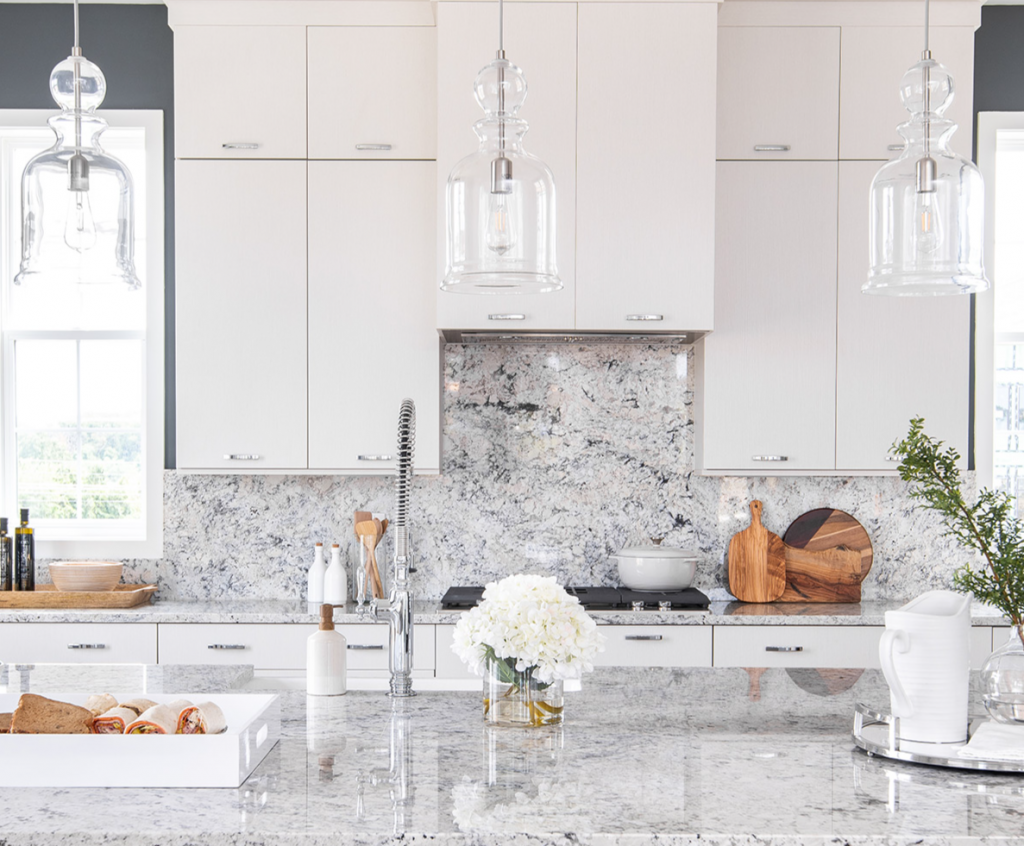
Kitchens are by far one of the most important rooms when it comes to deciding on a home purchase. One of the many conveniences of purchasing a new home is being able to customize a

Beazer Homes

kitchen space based on your individual liking and needs. Just like new homes, kitchens come in many styles and just like a home purchase, kitchen style decisions should be well thought out. While you can always add personal touches to any kitchen, first choosing a style will help you narrow down your options when it comes to creating your dream kitchen.


Kitchens.com gives us a look at several different styles:

Interested in seeing more styles? You can check out New Homes Guide’s ‘Interiors’  supplement for more kitchen inspirations. Which kitchen style are you?

Happy House Hunting! 

Winchester Homes


Posted: February 28, 2012 at 4:06 pm by: Nicole

These days, everyone seems to be looking for ways to save some money. Well, you’ve got easy and often very affordable (or even free!) ways to do that right in your own home. By conducting a do-it-yourself energy audit, you can assess how much energy your home consumes and figure out what you might be able to do to make it even more energy efficient.

You might be thinking, “I just moved into a brand new home. Isn’t it already as energy efficient as possible?” You are partially right – the house is well built with new windows and doors that shouldn’t have air leaks and probably came with EnergyStar rated appliances. However, there are still things you can do on your own to maximize your savings.

Is your home lit up like a Christmas tree year round? Take a look at where you have placed lighting and decide if you really need a high wattage bulb in that spot? You can save by switching to a low-watt bulb. If you have an area that is lit up a great deal of time, consider changing the regular bulbs out for CFLs – this can save up to 75% of lighting energy.

Do you keep your thermostat at a constant temperature all day and night or do you make adjustments for night time or trips? By regularly lowering your thermostat by 10 degrees (F), you could reduce your heating bill by 10-20%.

Have you checked to see what the temperature is set to on your refrigerator? The optimal setting is between 37 and 40 degrees (F). And did you know that by keeping a well stocked refrigerator, it will use less energy – it takes more energy to cool an empty fridge.

What about those toaster ovens or your fancy new microwave? Give them a workout and save money by not using the oven for smaller items.

Do you have a beautiful wood-burning fireplace in your new home? You’ve got money going up the flue if you’re not making sure that the damper is closed tightly.

These are examples of a few things you can do, even in a new home. For a host of other ways to evaluate and conserve your home energy, check out this piece by the EnergyIdeas Clearinghouse - there are tons of great tips and resources.

The Energy Efficiency Fact Sheet by EnergyIdeas Clearinghouse


Posted: February 17, 2012 at 4:04 pm by: Nicole

Our blog has a guest writer this week to help you out with your questions regarding PMI. Leslie Wish (CMPS), Senior Loan Officer with McLean Mortgage Corporation gives you information and guidance on this important detail relating to your mortgage:

Oftentimes buyers will come to me asking about mortgage insurance and why they have to pay it. To help you understand some of the extra costs associated with your mortgage, this is a breakdown of what factors determine whether or not you need mortgage insurance.

Private Mortgage insurance (PMI) is required by a lender if you make a down payment of less than 20% for conventional loans.  This insurance protects the lender in the event a borrower defaults on a loan.  The PMI can be paid as a part of your monthly mortgage payment, or as a lump sum at closing, or possibly rolled into your interest rate. 

FHA loans require mortgage insurance (MI) regardless of your down payment amount.  The MI is usually paid as an upfront lump sum equivalent to 1% of your loan amount.  FHA also requires MI to be paid as part of your monthly payment.

Veteran’s administrations (VA) Loans do not require mortgage insurance.  The VA does, however, require a funding fee, which is paid upfront in cash or financed into the loan amount.  In cases where the veteran has a disability, the VA funding fee will be waived.

It is important to talk to a lender to figure out which program will best fit your individual situation.

I would be happy to assist you with all of your mortgage lending needs! Please email me at lwish@mcleanmortgage.com  or visit me online at www.lesliewishmortgage.com so I can help you best determine which program works for you.

We hope you find this information useful!

 Happy House Hunting!

Posted: February 13, 2012 at 2:30 pm by: Nicole

Since 2000, The Pew Research Center reports that households with at least three generations of family members have increased by 30%. Wow – 30%! That seems like a pretty healthy gain to me but really not all that surprising.

Given the current economy, long life spans and the uncertainty of future financial security, the move back towards multi-generational housing makes a lot of sense. Aging parents are looking for ways to maximize their retirement income and not move into assisted living facilities. College graduates are coming back home due to lack of employment or the need for an assist as they first start out. Parents with young children could use an alternative to the added expense of day care. There are a plethora of reasons for everyone to move back in together and builders are beginning to recognize the trend with some changing floor plans.

The hot trend with new homes used to be two-story family rooms and foyers, elaborate media rooms, large owner’s suite sitting areas. While those options are still around, many buyers are looking to maximize the space in their home to allow for functionality with multi-generations as well as some privacy. Some of the latest designs: turning the 3rd bay of a 3-car garage into living space with a separate entrance, having an additional kitchen area or kitchenette, first-floor owner’s suites with another owner’s suite upstairs, living space above the garage that is normally storage or dead space, and full bedroom/baths in the basement with a kitchenette and laundry instead of the blown-out media room.

 Whatever your needs might be, now or in the future, take some time looking at plans to find the right one now that will work for years to come. Don’t be afraid to ask the builder if there is any possibility of making minor adjustments to existing plans. And enjoy one of the best benefits of multi-generational living – the emotional richness of family sharing time together again.

Happy House Hunting!


Posted: February 3, 2012 at 4:12 pm by: Nicole

 We recently let you know what rooms would make or break a homebuyer’s decision to purchase a home. But what about the outdoor space of the home? Are you a grill master or an expert gardener?  Do you simply enjoy reading a book and relaxing outside? Many consider a home’s outdoor space to be just as important as what is inside and with Spring on the horizon, I thought we could take a look at this important extension of your living space.

These days homebuyers seem to be taking a new look at how to best utilize the outdoor space. So many people seem to want to get outside once they get home to relax, enjoy the great outdoors and entertain. Using a variety of materials to build patios and decks is very popular and having an outdoor fireplace is a big hit right now. Privacy landscaping for the smaller yards seems to be a must. Comfy, functional furniture adds the final touch.

Here’s what homebuyers indicated is important in an outdoor space:

  • A large backyard
  • A deck or balcony
  • Installed landscaping (not everyone has that handy green thumb!)
  • Comfort and privacy


Pools and large front yards actually fell to the bottom of the list. Pool maintenance isn’t for everybody, plus many of the new home developments in our area provide residents with clubhouses and pools as amenities.

So, does this sound like you at all? If you would like to share with us what you would enjoy in an outdoor space, we’d love to hear it and I’m sure the builders would too.

Happy House Hunting!

Older Posts »